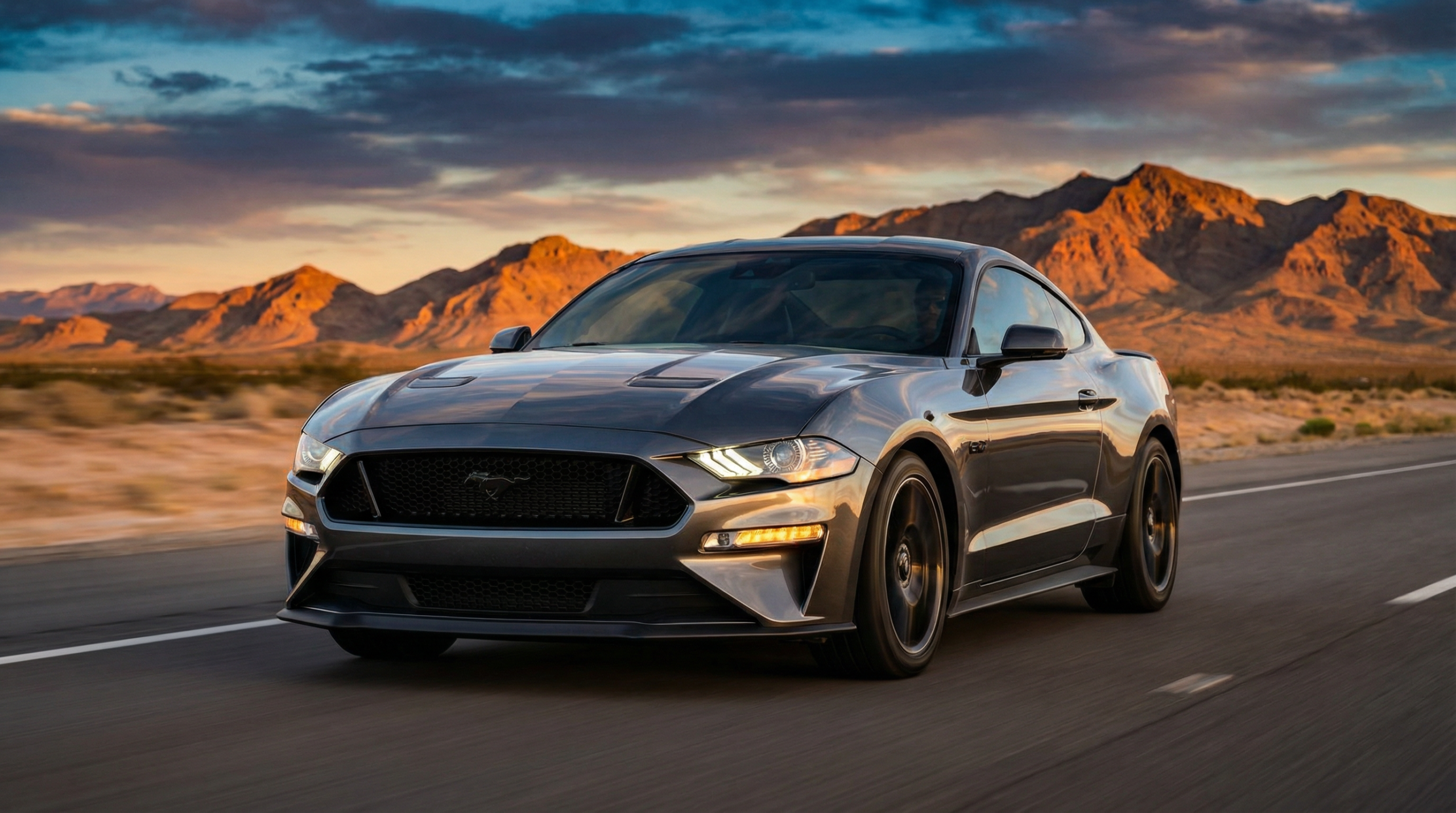
The Mustang is not just a car; it is a cultural phenomenon. From its debut at the World’s Fair to its starring roles in Hollywood blockbusters, the “Pony Car” has captured the hearts of millions. However, navigating the history, trim levels, and performance specs can be intimidating for beginners.
In this guide, we will take a deep dive into the legacy, performance, and ownership experience of this automotive legend. By the end, you will have a comprehensive understanding of what makes this vehicle special and how to choose the right one for your garage.
The Birth of a Legend: How It All Started
To truly appreciate the modern iteration, one must look back at the origins. The story begins in the early 1960s. Ford executive Lee Iacocca identified a massive gap in the market. He realized that the younger generation wanted a car that looked sporty and fast but was affordable enough for the average worker to buy.
On April 17, 1964, Ford unveiled the Mustang at the New York World’s Fair. The reaction was nothing short of hysteria. Ford expected to sell 100,000 units in the first year; they sold that many in just three months. By the end of the first year, over 400,000 Mustangs were on the road.
This launch created an entirely new class of automobile known as the “Pony Car”—affordable, compact, highly styled coupes with sporty or performance-oriented images. Exploring the Ford Mustang history shows that its secret weapon was customization. A buyer could order a basic six-cylinder coupe for a commute or check a few boxes to create a high-performance V8 monster.
A Walk Through the Generations
The Mustang has evolved significantly over seven distinct generations. Understanding these eras is crucial if you are looking to buy a used model or simply want to understand the car’s lineage.
The Classic Era (1st and 2nd Generation)
The first generation (1964-1973) is the golden era for collectors. These cars established the long hood and short deck styling cues that remain today. Iconic models like the Shelby GT350 and the Boss 302 were born during this time. The second generation (1974-1978), known as the Mustang II, is often controversial. While smaller and less powerful due to the oil crisis, it actually sold very well and kept the brand alive when gas prices skyrocketed.
The Fox Body and Modern Revival (3rd through 5th Generation)
From 1979 to 1993, the “Fox Body” Mustang dominated the streets. It moved away from retro styling, adopting a boxier, aerodynamic look popular in the 80s. These are currently surging in popularity among tuners because they are lightweight and easy to modify.
The fourth generation (SN95) brought back some curves, but it was the fifth generation (2005-2014) that changed everything. Ford adopted “retro-futurism,” designing a modern car that looked almost exactly like the 1960s originals. This design choice reignited the muscle car wars, forcing Chevrolet and Dodge to revive the Camaro and Challenger.
The Global Icon (6th and 7th Generation)
The sixth generation (S550), launched in 2015, marked a major shift. Ford finally added independent rear suspension to all models, transforming the Mustang from a straight-line drag racer into a genuine sports car that could handle corners.
Currently, we are exploring the Ford Mustang in its seventh generation (S650), introduced for the 2024 model year. It features a digital-forward interior, sharper styling, and continues the legacy of internal combustion power in an increasingly electric world.
Under the Hood: Performance and Specs
When you visit a dealership, you will generally face a choice between two primary engine philosophies. Understanding the difference is key to your enjoyment of the car.
The EcoBoost: Efficiency Meets Performance
Many purists dismiss anything without eight cylinders, but that is a mistake. The EcoBoost Mustang features a 2.3-liter turbocharged four-cylinder engine. Do not let the size fool you; these engines produce over 300 horsepower and massive amounts of torque.
The EcoBoost is lighter over the front nose than the V8 models, which makes the car feel nimble and eager to turn. It is an excellent choice for a daily driver, offering respectable fuel economy while still being faster than most traffic on the highway.
The Coyote V8: The Heart of the Beast
For the traditional experience, the GT model is the standard. It houses the 5.0-liter “Coyote” V8 engine. This engine is renowned for its durability, high-revving nature, and unmistakable sound.
In modern iterations, the GT produces nearly 500 horsepower. It provides that visceral, push-you-back-in-your-seat feeling that defines American muscle. If you are buying a Mustang for the emotional connection and the soundtrack, the V8 is the only way to go.
High-Performance Variants
Beyond the standard GT, Ford offers specialized trims like the Dark Horse or the legendary Shelby models (GT350 and GT500). These are track-focused weapons featuring upgraded cooling, stiffer suspension, and specialized tires. They are designed to compete with European sports cars costing twice as much.
Driving Experience: What It Feels Like
Reading spec sheets is one thing, but driving is another. When you sit in a modern Mustang, the first thing you notice is the visibility. The hood stretches out in front of you, featuring aggressive vents or bulges that remind you of the power underneath.
The steering in modern Mustangs (2015 and newer) is electrically assisted but offers distinct modes. You can toggle between Comfort, Normal, and Sport. In Sport mode, the steering gets heavier, giving you more confidence on twisting roads.
The ride quality has improved drastically over the years. Older Mustangs with solid rear axles would jitter over bumps and feel unsettled in corners. The newer models with independent rear suspension absorb road imperfections well, making the car a capable Grand Tourer. You could easily drive a modern Mustang across the country in comfort.
However, it is still a muscle car. It is wide, and the rear-wheel-drive layout means you need to respect the throttle, especially in the rain. Modern traction control systems are excellent at keeping you safe, but the car constantly reminds you that it has power in reserve.
Interior and Technology
Gone are the days of cheap plastics and rattling dashboards. Exploring the Ford Mustang interior today reveals a cockpit designed for the driver.
The latest generation features massive digital displays that replace traditional analog gauges. These screens are highly customizable. You can even set the digital dashboard to mimic the gauges of the 1980s Fox Body Mustang, a nostalgic touch that owners love.
Infotainment is handled by Ford’s SYNC system, which includes Apple CarPlay and Android Auto. Optional Recaro racing seats hug you tight during spirited driving, though the standard seats offer better comfort for long trips. While the back seats exist, they are best reserved for small children or extra luggage; legroom in the rear is minimal.
Choosing the Right Mustang for You
If you are in the market for one, the sheer number of options can be overwhelming. Here is a simplified guide to help you decide.
- The Daily Commuter: If you want the look and feel of a Mustang but need to commute 50 miles a day, look for an EcoBoost Premium. You get leather seats, better audio, and good fuel economy, all while driving a car that looks fantastic.
- The Weekend Warrior: If this is a second car or you simply want the full experience, get a Mustang GT with the Performance Pack. The V8 sound is essential for the weekend experience, and the Performance Pack adds better brakes and suspension for canyon carving.
- The Track Enthusiast: If you plan on attending track days, look for a used Shelby GT350 or the new Dark Horse. These cars have the cooling capacity to run hard laps without overheating, something standard street cars often struggle with.
- The Convertible Factor: The Mustang is one of the few performance cars still offering a convertible option across the lineup. If you live in a sunny climate, the drop-top experience adds a layer of enjoyment that is hard to quantify. Just be aware that convertibles have slightly less trunk space.
The Future of the Pony Car
The automotive landscape is shifting toward electrification. Ford has already introduced the Mustang Mach-E, an all-electric SUV. While it shares the badge and some styling cues, it is a different animal entirely, aimed at the family crossover market.
However, for the traditional coupe, Ford has made a bold statement. While competitors like the Chevrolet Camaro and Dodge Challenger are being discontinued or electrified, Ford has committed to keeping the gas-powered Mustang alive with the new S650 generation.
Exploring the Ford Mustang today is about celebrating the last stand of the internal combustion muscle car. It represents a commitment to mechanical engagement in a digital world.
Conclusion
The Ford Mustang has survived for over 60 years because it adapts. It has been a budget runabout, a gas-sipping economy car, a drag strip king, and a world-class sports car. It transcends social classes; you are just as likely to see a Mustang in a high school parking lot as you are in the driveway of a CEO.
Whether you opt for the sensible EcoBoost or the roaring Coyote V8, owning a Mustang connects you to a rich history of American engineering. It offers a driving experience that is becoming increasingly rare—one that prioritizes fun, character, and soul over mere transportation. If you have been thinking about getting behind the wheel, there has never been a better time to join the stampede.
Frequently Asked Questions (FAQ)
- 1. Is a Ford Mustang a good first car for a beginner? Yes, but with caveats. An older V8 Mustang might be too powerful for an inexperienced driver. However, a newer EcoBoost model offers modern safety features (like blind-spot monitoring and traction control) and manageable power, making it a safe and fun choice for a responsible new driver.
- 2. Is the Mustang expensive to maintain? Compared to German luxury sports cars like BMW or Audi, the Mustang is very affordable to maintain. Parts are widely available, and any mechanic can work on them. The biggest recurring cost for V8 owners is usually fuel and tires.
- 3. How is the Ford Mustang in the snow? The Mustang is a rear-wheel-drive vehicle with plenty of torque, which can be challenging in snow. However, if you equip the car with a dedicated set of winter tires and use the “Snow/Wet” driving mode, it is surprisingly capable. Driving on summer performance tires in the snow is dangerous and not recommended.
- 4. What is the difference between the Mustang GT and the Mustang Dark Horse? The GT is the standard V8 model designed for street use. The Dark Horse is a high-performance variant of the V8 that features a more powerful engine (500 HP), upgraded cooling systems, stiffer suspension tuning, and aerodynamic changes specifically designed for racetrack performance.
- 5. Does the Mustang hold its value? Generally, Mustangs hold their value relatively well, particularly V8 models and special editions like the Shelby GT350 or GT500. Base models tend to depreciate faster, but the strong enthusiast community ensures there is always a market for used Mustangs.
Leave a Reply